Does Your Wife Think You're a Somatic Narcissist?!
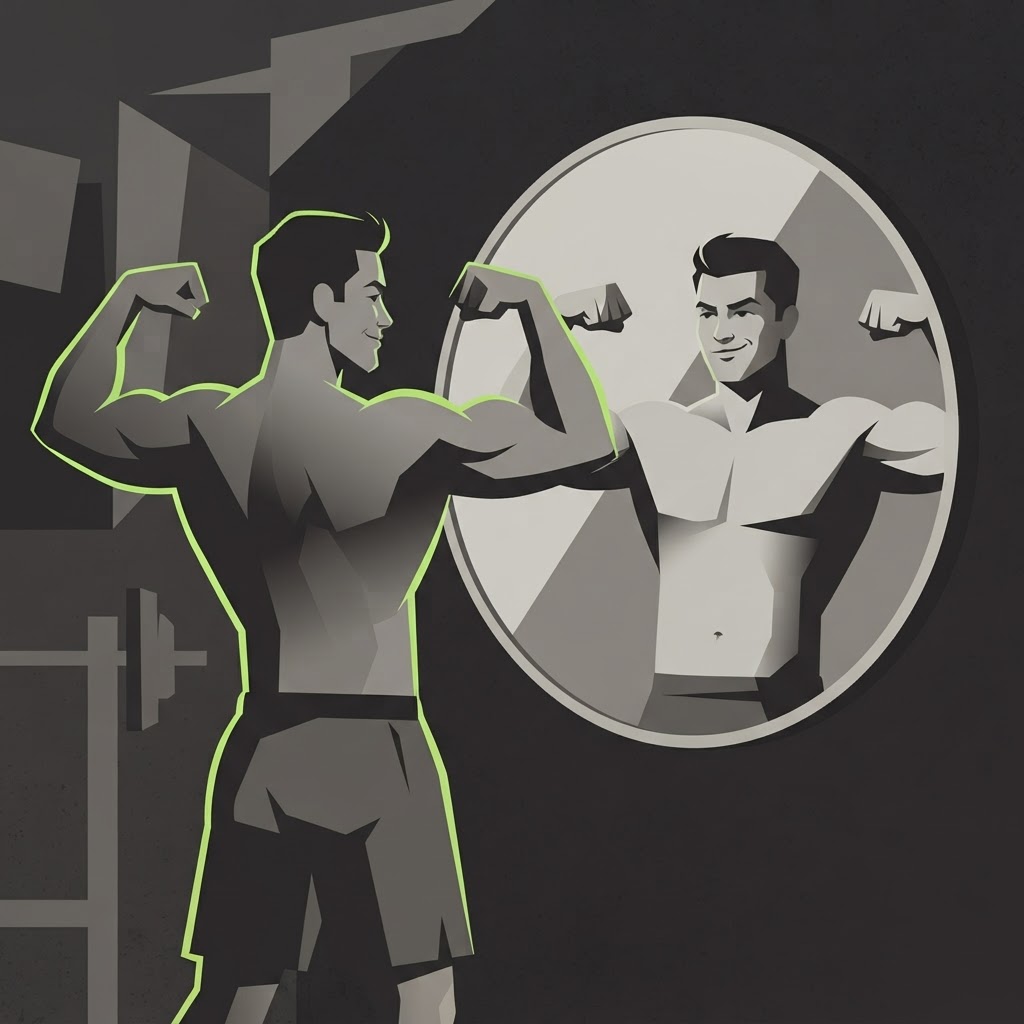
"Why does she say I'm too focused on my appearance or that I seek validation through my looks?"
Meet Derek … The "Mirror Man"
Derek adjusted his collar in the hallway mirror for the third time, turning slightly to check the angle of his jaw, the way his shirt fell across his shoulders. He'd been at the gym since five that morning, and the pump was still visible if he stood at the right angle.
Lauren appeared behind him in the reflection, holding their toddler. "We're going to be late, Derek."
"Two minutes," he said, shifting to check his other side.
She waited, then said, "You look fine. You always look fine. Can we go?"
There was something in her tone, a flatness that used to be playful and had slowly worn into something that sounded like resignation. He heard it, but the mirror was right there, and the reflection was the version of himself he trusted most, the one he'd spent years building, the one that said he was worthy because he looked the part.
Derek grabbed his keys and headed for the door. He didn't notice that Lauren had stopped complimenting him months ago, or that she'd started directing her admiration entirely toward their son, or that the silence between them had grown in direct proportion to the time he spent in front of the mirror, because admitting that would mean looking at something no reflection could show him.
Somatic narcissism manifests when you derive your sense of worth primarily from your physical appearance, fitness, or attractiveness. You might spend significant time and energy on your looks, seeking validation and admiration for your physical attributes rather than building deeper emotional connections.
Your partner may feel that you're more invested in how you look than in how the relationship feels, that you seek attention from others based on appearance, or that physical attraction is prioritized over emotional intimacy. This creates a shallow foundation that can't sustain lasting connection.
Somatic narcissism arises when you use your physical appearance and attractiveness as the primary source of validation and self-worth. You might believe that being physically appealing is what makes you valuable, leading you to prioritize appearance over emotional depth.
Your partner may feel that you're obsessed with your looks, that you seek admiration from others, or that the relationship lacks emotional substance because physical attraction takes precedence. She might sense that you value being desired more than being truly known.
The transformation comes from valuing depth over appearance.
By recognizing that lasting relationships are built on emotional connection, vulnerability, and shared values—not just physical attraction—you can shift from seeking validation through appearance to building genuine intimacy through emotional presence.
Ready to build depth beyond appearance?
Take our assessment to understand how your focus on appearance affects your relationship and learn to develop deeper connection.
Take the Assessment Now →Other Narcissism Types
If you recognize behaviors from other patterns, each has its own page and focused assessment.